Learn About the Salmon Life Cycle
A salmon’s life is a big circle. It starts in a stream, swims to the ocean, and comes back home.
-
Step 1: Eggs
A salmon starts as an egg. The mother salmon lays her eggs in a nest at the bottom of a stream. The nest is made of gravel. The eggs stay hidden in the gravel all winter.
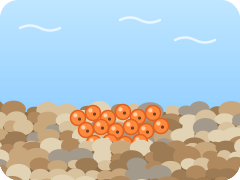
Word to know: a salmon nest is called a redd.
-
Step 2: Alevin
In the spring, the eggs hatch. The baby fish is called an alevin. It has a round yolk sac on its belly. The yolk sac is its food. The alevin stays hidden in the gravel while it grows.
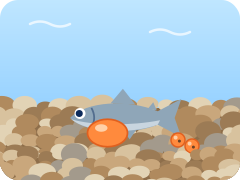
Say it like this: AL-uh-vin.
-
Step 3: Fry
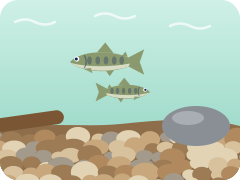
When the yolk sac is all used up, the little fish swims up out of the gravel. Now it is called a fry. Fry eat tiny bugs. They hide by rocks and logs so bigger animals can’t catch them.
-
Step 4: Smolt
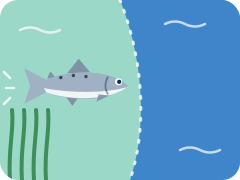
The young salmon swims down the river toward the ocean. Now it is called a smolt. Its body turns silver. It waits where the river meets the sea until its body is ready for salty water.
-
Step 5: Adult
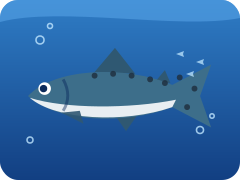
In the ocean, the salmon eats and eats. It grows big and strong. Now it is an adult. Salmon live in the ocean for a few years.
-
Step 6: Spawner
The grown-up salmon swims all the way back to the stream where it hatched. It is a long, hard trip! Its body turns a new color, and the males grow a hooked nose. Now it is called a spawner. The mother salmon lays her eggs in the gravel, and the life cycle starts again.
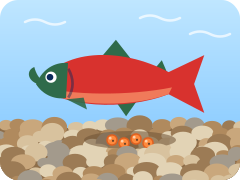
Did you know? After they lay their eggs, the old salmon die. Their bodies become food for bugs, birds, bears, and even the trees by the stream.
Want to learn more?
Read about salmon in Olympic National Park. It has real photos of each stage.
This page is written for older readers. Ask a grown-up helper to read with you.
Grown-ups: how did this activity go? Send us feedback
For teachers
Six stages, as many salmon programs teach them for young students: eggs, alevin, fry, smolt, adult (in the ocean) and spawner. Sentences are short so students can read them or press Listen. The Spawner card mentions that salmon die after spawning; you can remove that note in lifeCycle.php. Sources: Olympic National Park (NPS), the U.S. Fish & Wildlife Service salmon life cycle lesson, and the Alaska Department of Fish & Game Salmon in the Classroom curriculum. The pictures were drawn for this site.